 Performance Marketing
SEO Basics: How to Rank Higher on Google Without Paying for Every Click
On this page
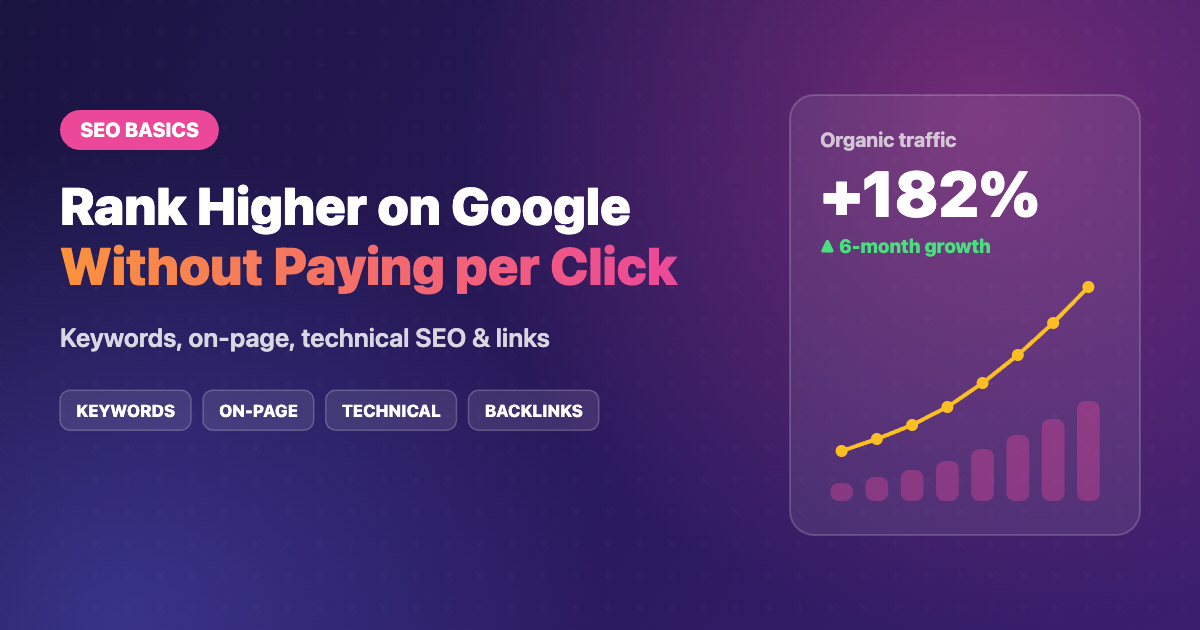
Paid ads stop the moment your budget runs out. Search engine optimisation (SEO) is different: the work you put in today can keep bringing visitors for months or years. If you want a steady stream of traffic that does not depend on ad spend, SEO deserves a place in your marketing plan.
Start with keyword research
Every good SEO strategy begins with understanding what your customers actually type into Google. Use free tools such as Google Search Console, Google Keyword Planner or the "People also ask" box to find phrases related to your products. Look for keywords with clear intent and realistic competition. A small business will rarely rank for "shoes", but it can rank for "handmade leather shoes in Pune".
Optimise every page
Once you know your target keywords, make sure each page focuses on one main topic. Put the keyword in the page title, the URL and the first paragraph, and use it naturally in subheadings. Write a meta description that tells searchers exactly what they will get if they click. Add descriptive alt text to images and link to related pages on your own site so visitors and search engines can find more of your content.
Publish content that answers real questions
Google rewards pages that genuinely help people. Instead of writing thin posts stuffed with keywords, create guides, comparisons and how-to articles that answer the questions your customers ask your sales team every week. Update older posts regularly so the information stays accurate.
Fix the technical foundations
A slow or broken website will struggle to rank no matter how good the content is. Check that your pages load quickly on mobile, that your site uses HTTPS, and that there are no broken links or duplicate pages. Submit an XML sitemap through Google Search Console so new pages are discovered faster.
Earn links from other websites
Links from trusted websites act like votes of confidence. You can earn them by publishing original data, writing guest articles for industry blogs, getting listed in relevant directories and building relationships with local media.
Be patient and measure progress
SEO usually takes three to six months to show strong results. Track organic traffic, keyword rankings and conversions each month, double down on what works, and keep publishing. Over time, SEO becomes one of the most cost-effective growth channels a business can have.